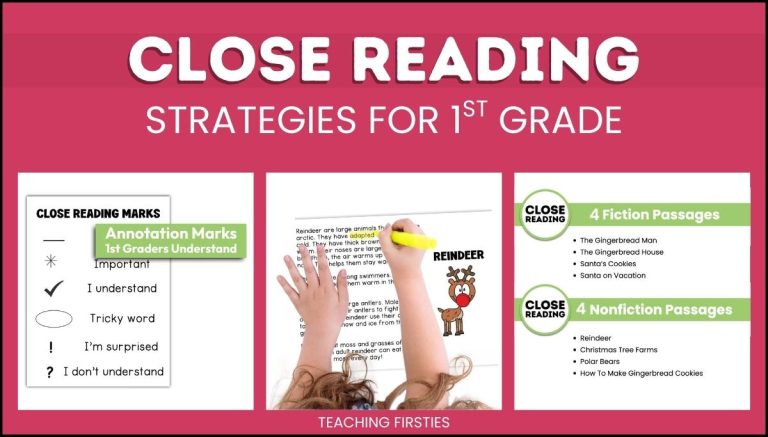
First grade close reading is a structured way for students to reread a text with a specific purpose, such as noticing vocabulary, identifying key details, or answering text-based questions. It helps young readers move beyond decoding and teaches students how to think about what the text means.
This blog explains how close reading strategies align with Common Core ELA standards and support early reading comprehension and fluency. When used with shorter passages, close reading is an appropriate way for young readers to understand what they read.
What is First Grade Close Reading?
First grade close reading strategies involve rereading a short text with a clear focus each time, helping students notice what the text says and what it means.
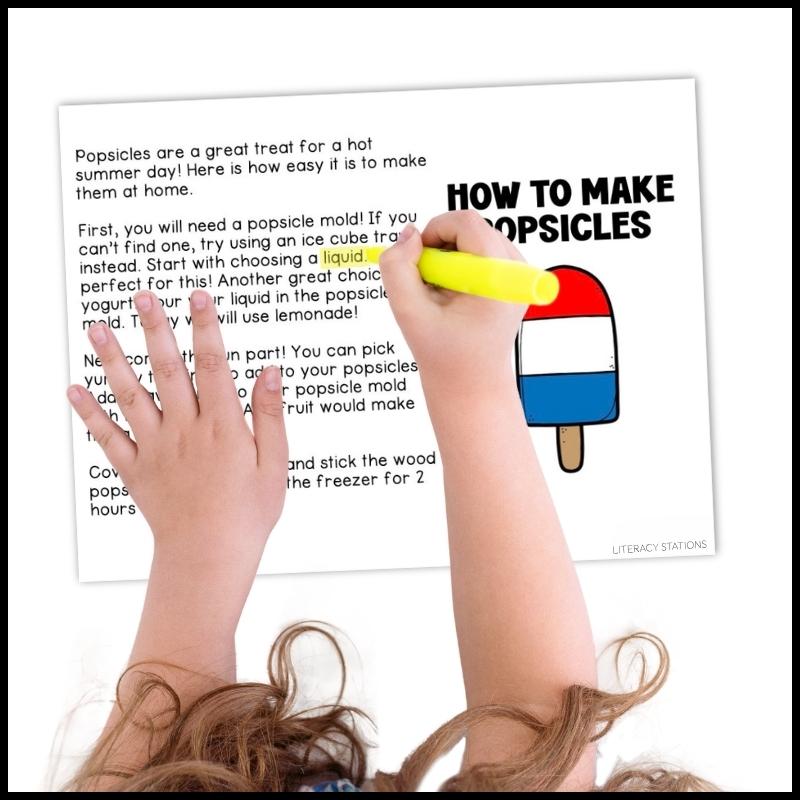
Students will:
- Reread the same passage across several days making the text familiar so they don’t struggle with decoding
- Answer text-based questions that require more than yes/no responses (e.g., “How do you know?” or “What part of the text tells you that?”)
- Notice patterns in vocabulary, structure, or wording, such as repeated phrases, descriptive language, or how the author organizes ideas
- Build reading independence through gradual release from teacher modeling to student practice
Reading Literature Standards
Close reading supports first grade literature standards by giving students repeated, focused practice with understanding story elements and responding to text-based questions.
- RL.1.1 – Ask and answer questions about key details in a text – Students reread to locate specific information and support answers with evidence directly from the text.
- RL.1.2 – Retell stories, including key details, and demonstrate understanding of their central message or lesson – Close reading routines allow students to focus on sequence and meaning, helping them retell accurately and explain the story’s message.
- RL.1.3 – Describe characters, settings, and major events in a story, using key details – Through multiple readings, students have time to notice descriptions, track story events, and identify important character actions.
- RL.1.4 – Identify words and phrases in stories or poems that suggest feelings or appeal to the senses – Slowing down the reading process helps students hear expressive words, discuss emotional language, and notice sensory details.
Free for first grade teachers
One new literacy center idea each week
Practical, ready-to-use ideas for first grade literacy centers. One email a week at most.
Reading Informational Text Standards
Close reading helps first graders build comprehension skills with nonfiction by rereading to find key ideas, supporting details, and topic-specific vocabulary.
RI.1.1 – Ask and answer questions about key details in a text – Students return to the passage to locate information and answer questions using text evidence instead of guessing.
RI.1.2 – Identify the main topic and retell key details of a text – Through focused rereading, students highlight repeated ideas and use them to explain what the text is mostly about.
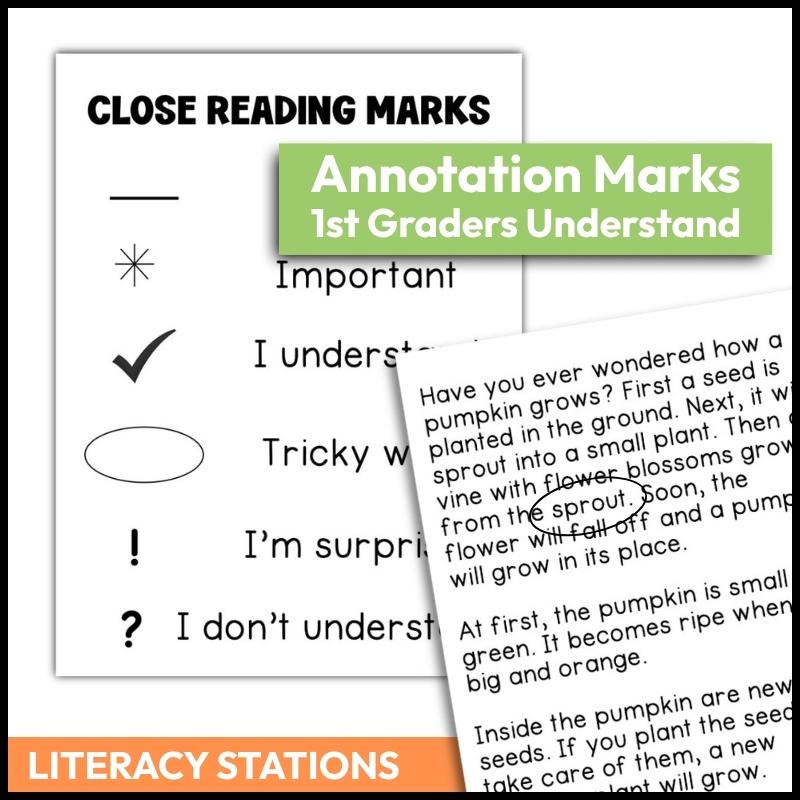
RI.1.3 – Describe the connection between two individuals, events, ideas, or pieces of information in a text – Close reading routines give time for students to notice how facts, events, or concepts relate to each other and explain those connections in their own words.
RI.1.4 – Ask and answer questions to help determine or clarify the meaning of words and phrases in a text – Revisiting the same passage helps students use text clues—like pictures, context, and repeated words—to understand unfamiliar vocabulary.
Reading Foundational Skills Standards
Close reading routines give students opportunities to practice accuracy, fluency, and expressive reading with short, grade-level texts.
- RF.1.4 – Read with sufficient accuracy and fluency to support comprehension – Students build fluency and confidence by rereading the same text across several days, which helps them move from sounding out to reading smoothly.
- RF.1.4a – Read on-level text with purpose and understanding – Each rereading is guided by a specific goal—such as noticing vocabulary or answering a question—so students read with intention rather than just for speed.
- RF.1.4b – Read on-level text orally with accuracy, appropriate rate, and expression – Familiar text supports expressive reading as students gain control over pacing, phrasing, and voice, making them stronger oral readers.
Speaking, Listening, and Language Skills
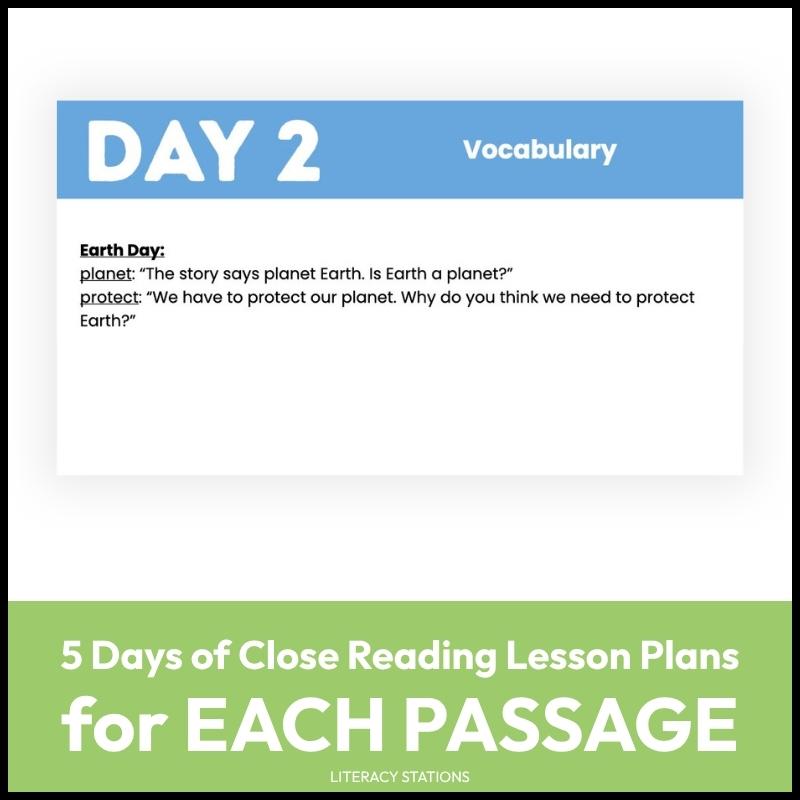
Close reading encourages students to discuss text with others and learn vocabulary through repeated exposure and guided support.
- SL.1.1 – Participate in collaborative conversations about grade 1 topics and texts – Students talk with partners or small groups about what they notice in the text, answer text-based questions, and explain their thinking during close reading discussions.
- L.1.4 – Determine or clarify the meaning of unknown and multiple-meaning words and phrases – Slowing down during rereading gives students time to use context clues, illustrations, and discussion to figure out unfamiliar words.
What First Grade Close Reading Lessons Look Like
Close reading doesn’t have to be complicated to be effective in first grade. When used with short, grade-level texts, close reading helps students slow down, notice important details, and build new comprehension skills they need for reading.
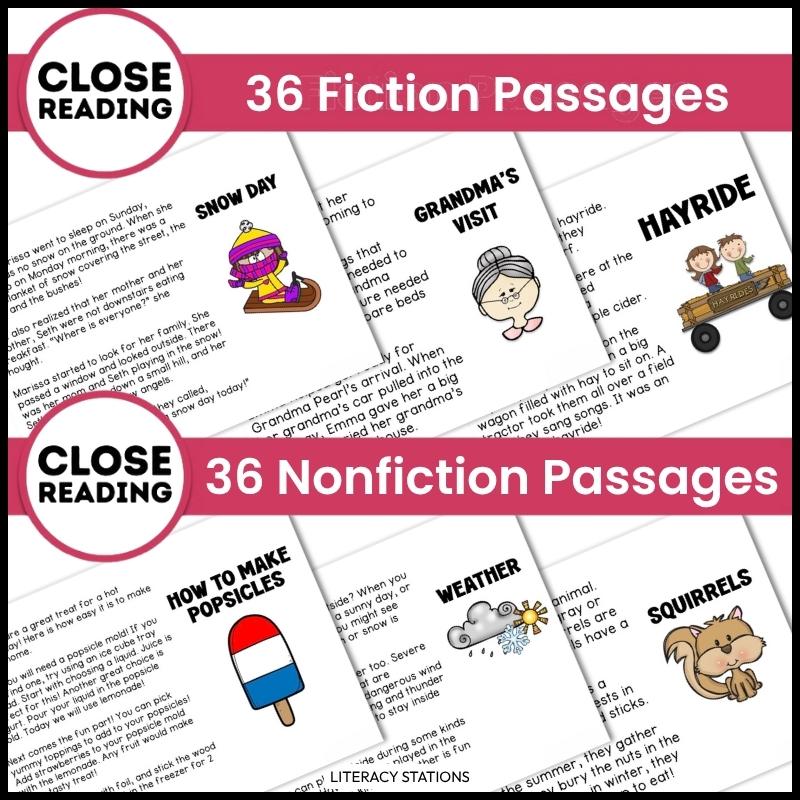
If you’re ready to bring close reading into your daily reading block without planning each step from scratch, the Close Reading Passages on LiteracyStations.com offers a full year of support. With 72 passages (fiction and nonfiction), 5-day close reading lesson plans, annotation activities, and vocabulary tasks, everything is ready for you to print or assign digitally.
Each passage is designed to build comprehension, vocabulary, and fluency while supporting first grade standards in both fiction and nonfiction close reading text.
This bundle helps teachers get started with first grade close reading right away, with the flexibility to use all or just parts of the resource depending on your instructional goals.