Teaching capitalization in first grade doesn’t have to be complicated. With a few simple routines, students can learn when and why words need capital letters without constantly needing teacher reminders. Here are five practical strategies you can use for capital letter practice in your daily writing plans.
Teaching Capitalization with Sentence Beginnings
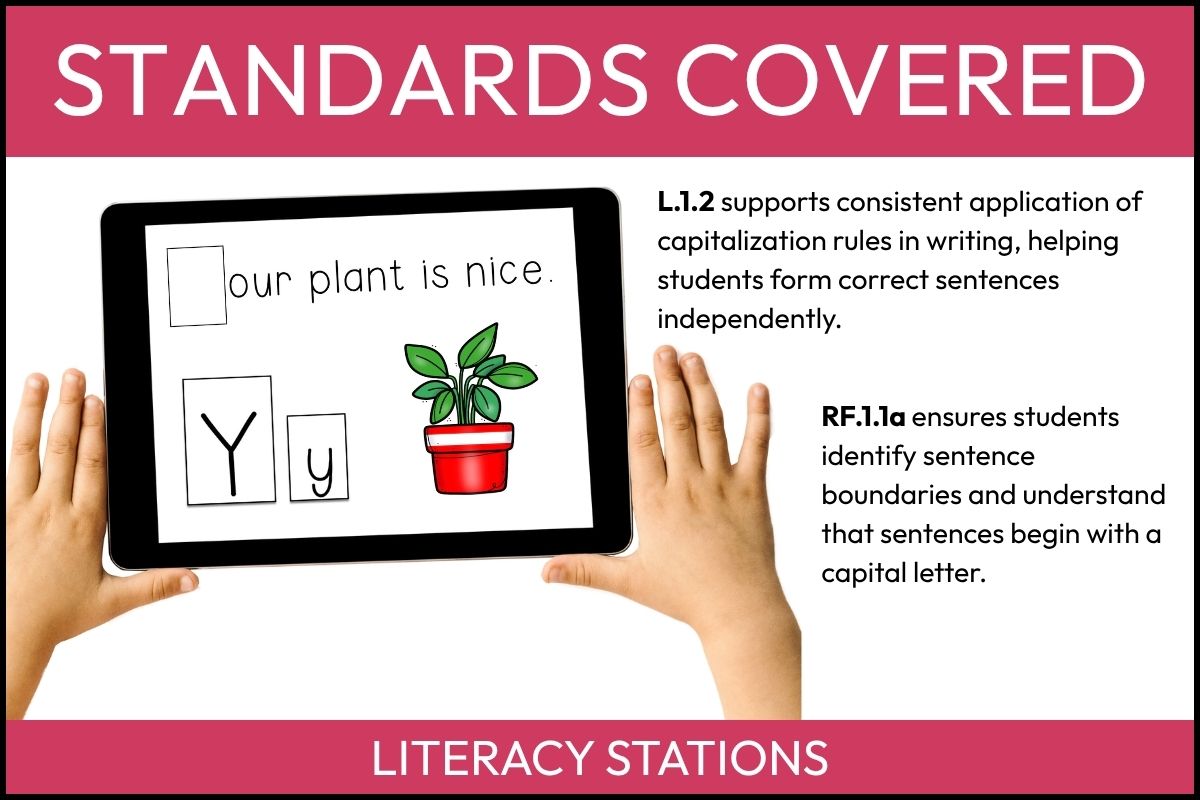
When teaching capitalization, it helps to begin with a rule students can apply right away. First graders benefit from seeing and building complete sentences they can easily read, such as I like apples. or The dog ran.
Modeling the capitalization at the start reinforces sentence awareness and helps students recognize where a thought begins. Once students can consistently start sentences with capital letters, you can gradually introduce proper nouns and other capitalization rules.
Add Capital Letter Practice to all Shared Writing
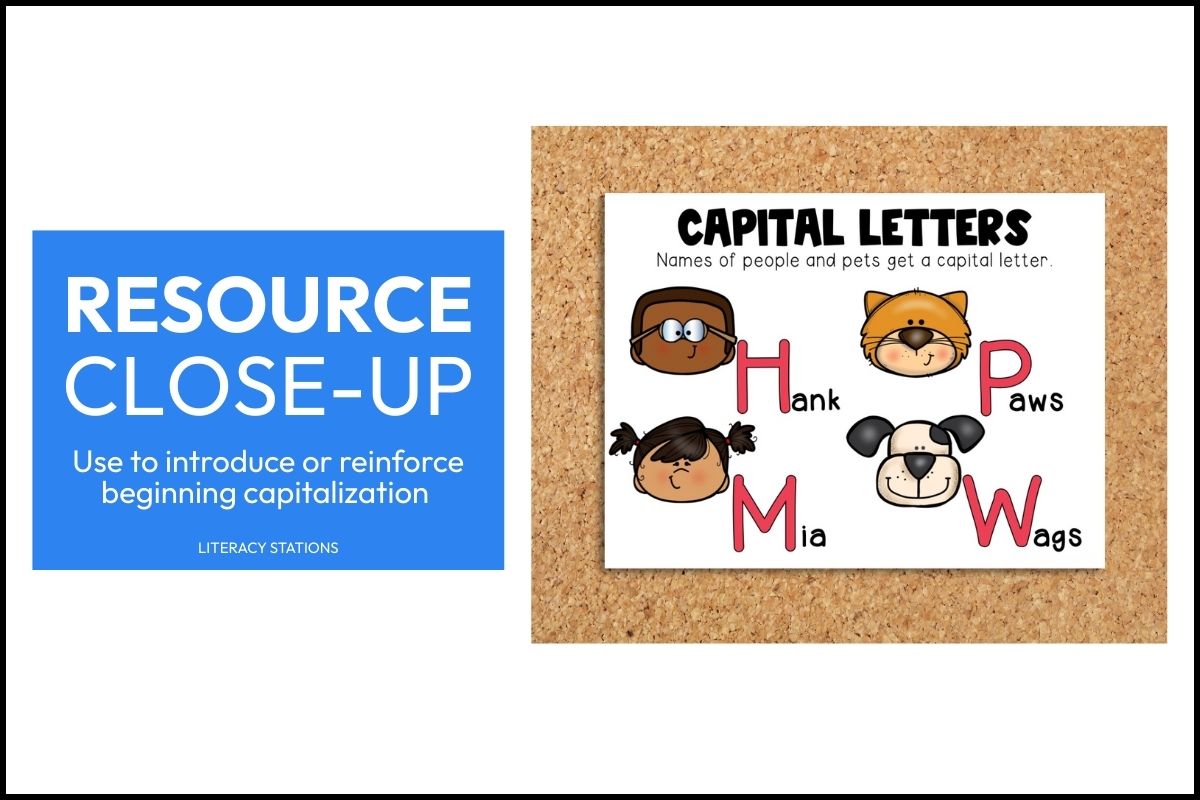
When writing a class story or sentence, pause to point out capital letters and explain your thinking: “This is the start of a new sentence, so I’ll use a capital T.” Invite students to help find and fix capitalization errors together.
Reading and revising out loud helps them connect what they hear with what they see on the page, reinforcing that capitalization is a big part of writing.
Use an anchor chart such as this one to help students remember when to use capital letters.
Free for first grade teachers
Free writing papers for every season
Seasonal writing paper for first grade, ready to print. Plus one new idea for your literacy centers each week.
Assign Capital Checkers

Give students a role in applying what they’ve learned by assigning a “Capital Checker” during writing time. This student’s job is to look for missing capital letters in their own work or a partner’s.
Rotating this responsibility helps every student practice identifying sentence beginnings and proper nouns. It also builds accountability. Students learn to review their writing carefully and support each other in applying capitalization rules correctly.
Use Digital Capital Letter Practice
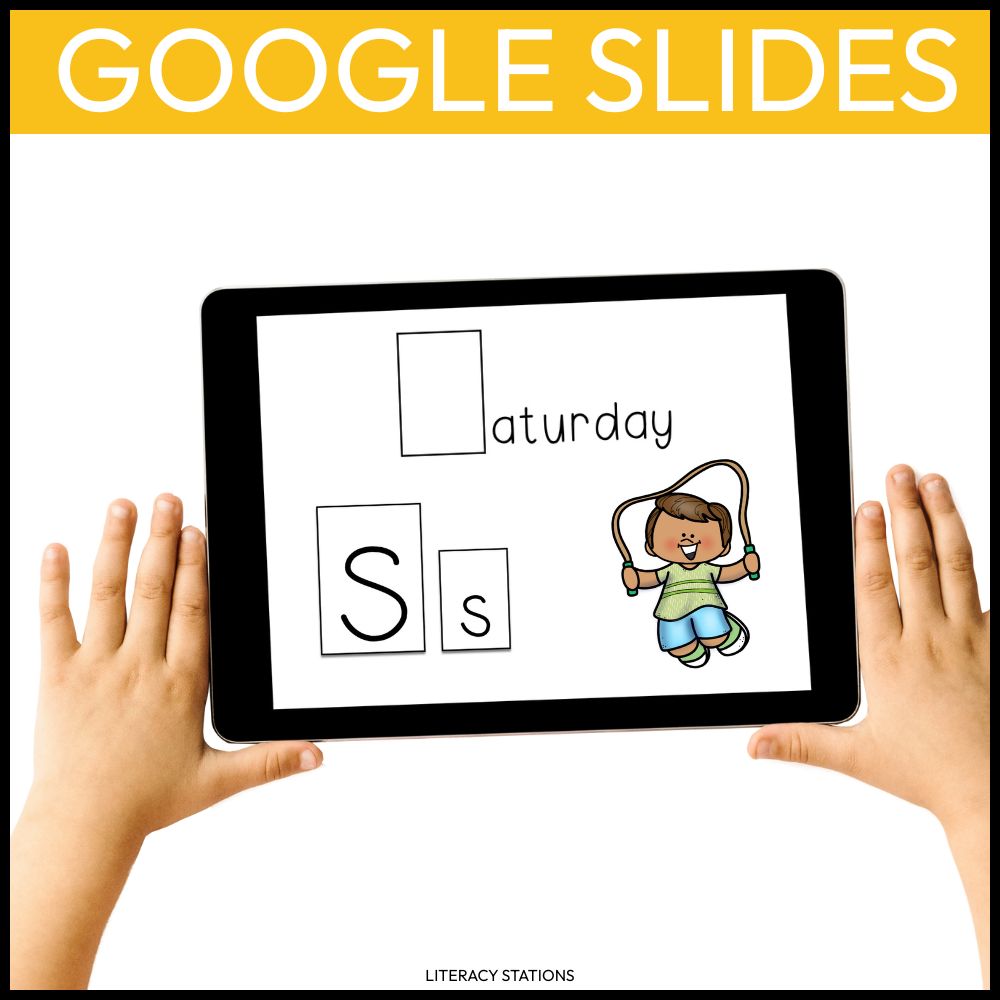
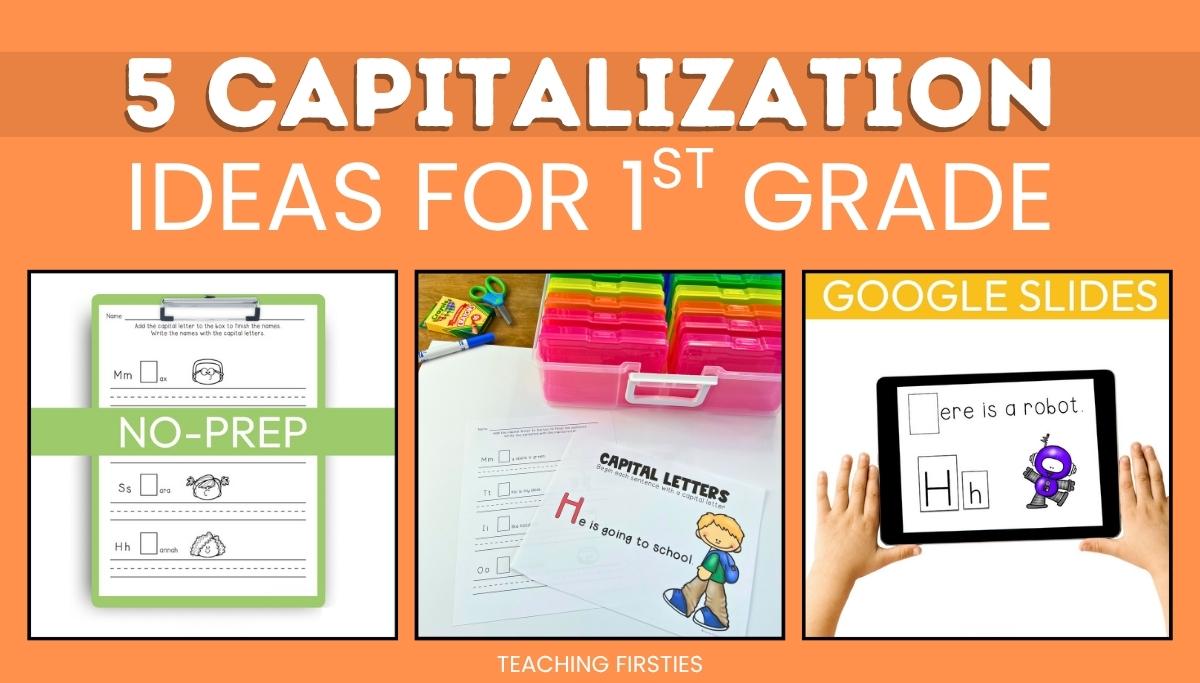
Digital activities make it easier for students to practice capitalization independently. These capitalization activities for first grade include interactive Google Slides where students drag and drop capital letters, listen to audio directions, and correct sentences on their own.
These tasks reinforce the same skills you’ve modeled in class—starting sentences correctly, capitalizing names, and identifying proper nouns—while giving students the extra practice they need to apply those rules without teacher support.
Capitalization Review
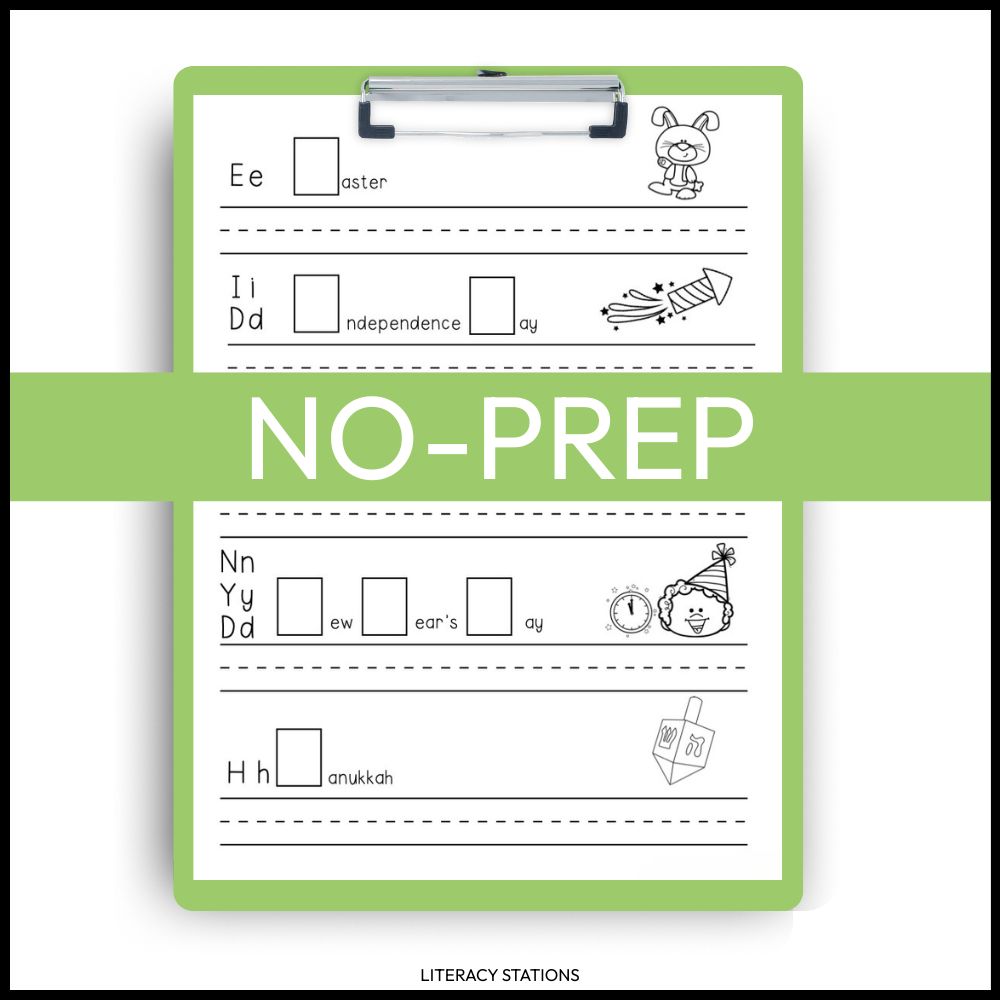
Daily capital letter practice makes it easy to reinforce capitalization rules. These capitalization worksheets include short tasks you can use for morning work, bellringers, or early finisher activities. These printables help students review capitalization rules in a low-pressure setting without needing a full lesson.
Teaching capitalization becomes easier when students have routines, modeling, and opportunities to practice independently. These capitalization activities for first grade include both printable and digital options to make capital letter practice simple to manage in any classroom setting.