Close reading lessons work best when your plans are simple, consistent, and developmentally appropriate. These quick close reading strategies give you practical ways to help your students read to understand a passage.
1. Use very short passages.
Choose a 3–5 sentence close reading passage so your students can focus on understanding instead of getting overwhelmed by decoding.
Examples:
- One short paragraph of informational text
- A simple 3–5 sentence narrative
Use our ready-to-go close reading passages – perfect for first grade reading stamina.
2. Give a clear purpose before each reread.
Tell your students exactly why they are rereading so they know which close reading strategies they’re using.
Examples:
- “Today we’re reading to find key details.”
- “Today we’re reading to understand new vocabulary.”
3. Model the thinking aloud first.
Show your students what close reading sounds like by asking questions out loud and demonstrating how to revisit the text.
Examples:
- “I notice the author repeats this word…”
- “Let me check that sentence again.”
4. Keep each day’s focus to just one skill.
Choose one goal per lesson, like retelling, building vocabulary, or finding text evidence. Your students might be overwhelmed if you’re working on too many close reading strategies at once.
Weekly Example:
- Day 1: Retell
- Day 2: Vocabulary
- Day 3: Text evidence
Full close reading lesson plans are included. You’ll know what close reading strategies to teach and how to teach them.
6. Give students a visual cue for the day’s goal.
Use images or visuals to help your students remember what they’re looking for during close reading.
Examples:
👀 = first read
🔍 = detail or vocabulary
💬 = text evidence
7. Ask questions that require more than yes/no answers.
Use prompts that encourage your students to return to the text and explain what helped them figure out an answer.
Examples:
- “What in the text helped you figure that out?”
- “Which words helped you know how the character feels?”
8. Let students mark the text in simple, purposeful ways.
9. Take the pressure off students with partner talks.
Give your students a quick opportunity to talk to their partner before responding so they can think through their ideas before returning to the text.
Examples:
- “Turn and tell your partner what happened first before we reread.”
- “Share one word you heard that helped you understand the character.”
- “Tell your partner where you would look in the passage to find that answer.”
10. Keep close reading short and consistent.
Use a 7–10 minute routine each day to build comprehension without overwhelming your students.
Examples:
- Short daily passage rereads
- One task per lesson
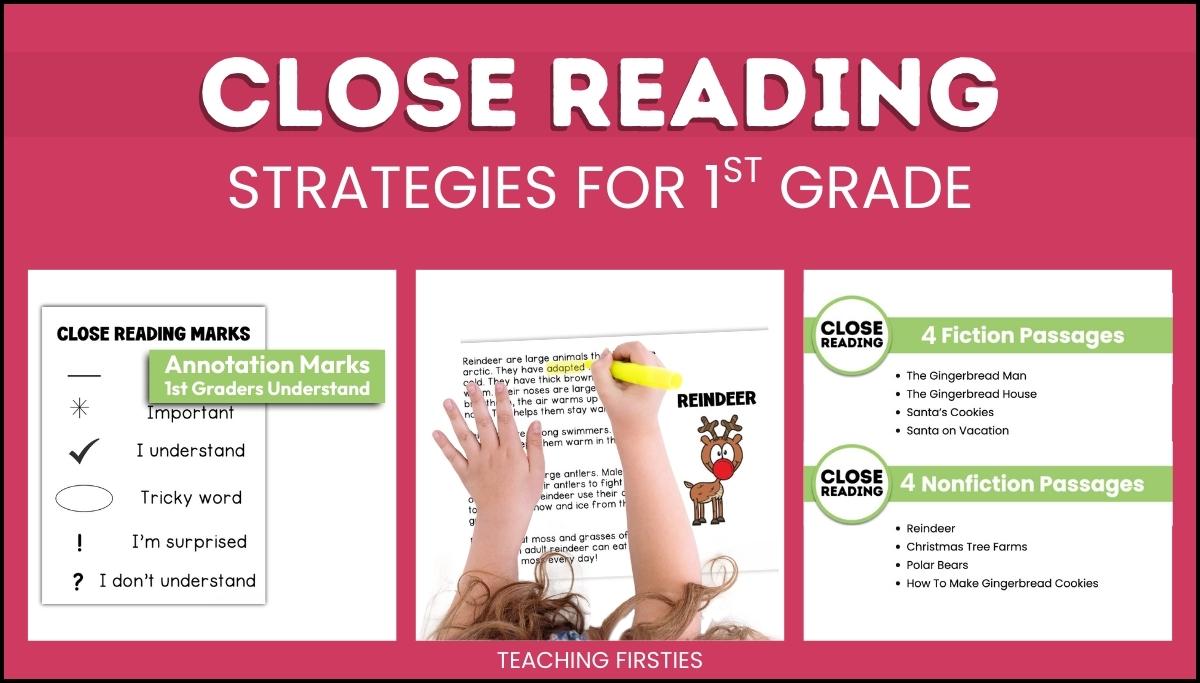
Our close reading passages from LiteracyStations.com will help your students annotate key details, identify tricky or important words, and respond to comprehension questions in the included reading passages. The close reading activities are no-prep and available in both printable and Google Slides formats.
Use these passages to teach close reading strategies during small groups or in your daily reading block.


