Many teachers want to add a bit of fall fun to their writing block, but end up with vague prompts, low-effort responses, and unclear expectations. This post helps you move beyond “write about pumpkins” to scaffolded, standards-aligned writing that students can practice and grow from. Here are 5 pumpkin writing activities you might want to try this fall.

Build Vocabulary First
Start with your student’s own experiences and background knowledge with pumpkin read-alouds, class discussions, or hands-on observations.
Use a word bank or anchor chart to introduce vocabulary students will need in their writing—words like vine, sprout, patch, harvest, round, and carve. These words connect to science content and give students a strong foundation for describing, labeling, and forming complete thoughts.
Model Sentence Structure
Use shared writing or sentence frames to show students what a complete response looks like. Start with short, repeatable frames like:
I see a ______ pumpkin.
My pumpkin is ______ because ______.
This step is especially helpful for writers who struggle to get started. Model the process aloud, write the sentence on the board or anchor chart, and reread it together. It’s a simple step that helps independence and reduces off-topic responses.
Free for first grade teachers
Free pumpkin writing paper
Pumpkin-themed writing paper for October writing centers, ready to print today.
Publish Your Pumpkin Writing Activities
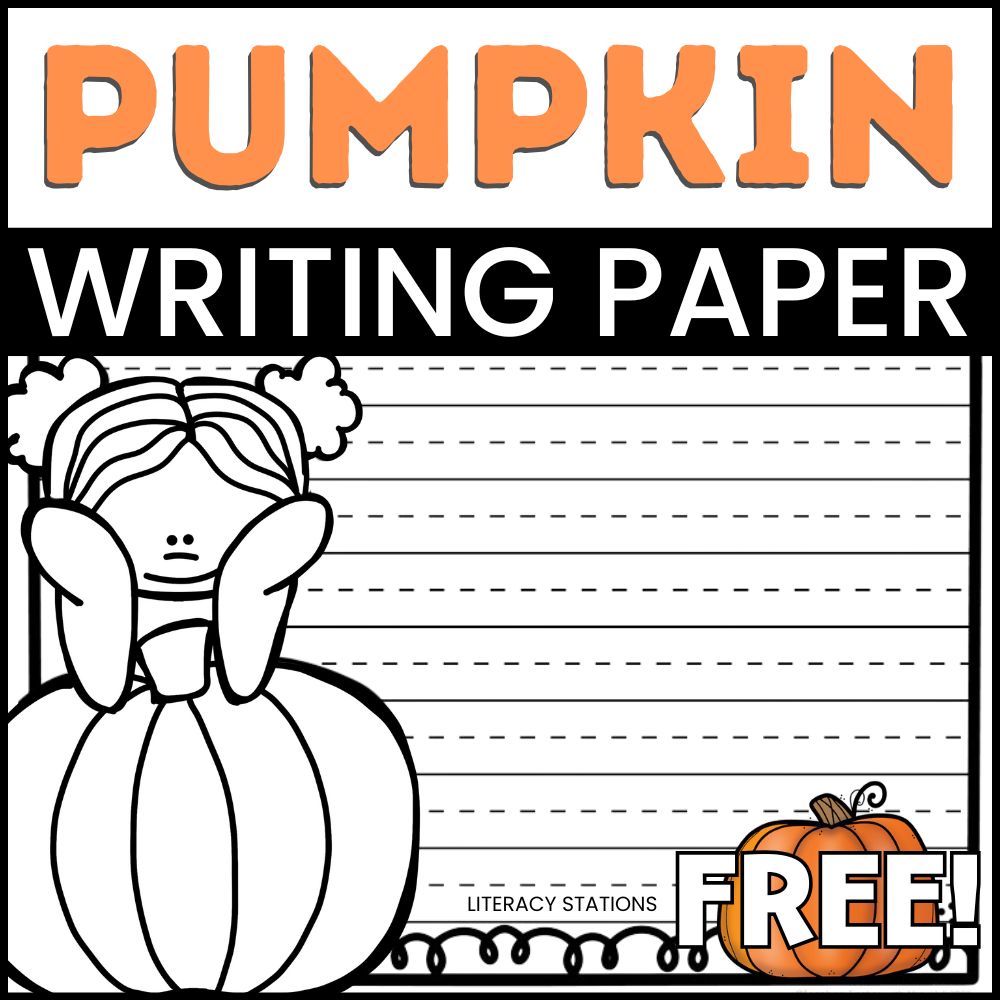
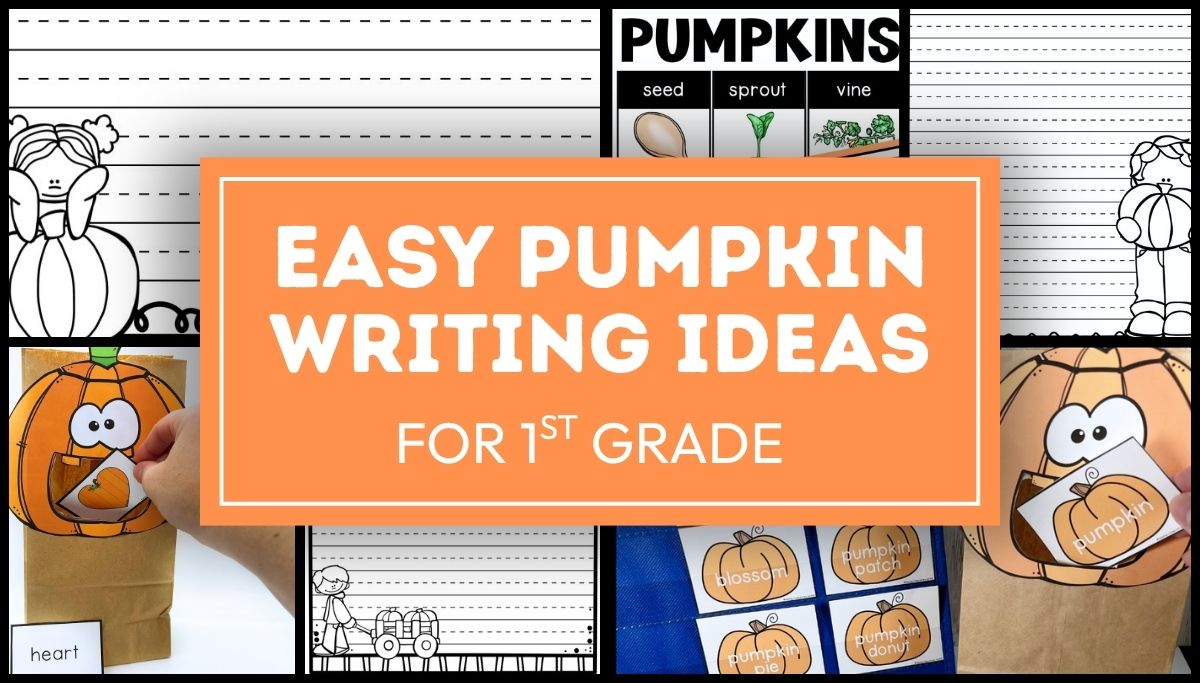
This set of Free Pumpkin Writing Paper gives your students a seasonal way to publish their work, and gives you a no-prep option for fall writing. With 36 pages to choose from, including differentiated lined formats, drawing space, and 20 pumpkin writing prompts, this set supports your writing lessons all month.
Use Pumpkin Writing Prompts
Move from modeled writing to guided prompts. The Free Pumpkin Writing Papercomes with 20 pumpkin writing prompts to use for whole-group writing or independent work. Prompts like the ones you’ll get with your download help students focus their ideas while still allowing room for creativity. Use them after a read-aloud or science lesson to extend your block without adding extra prep.
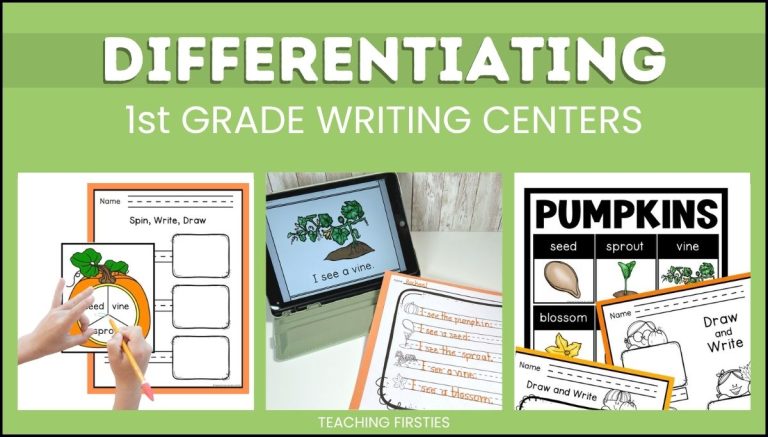
Differentiate At Your Writing Centers
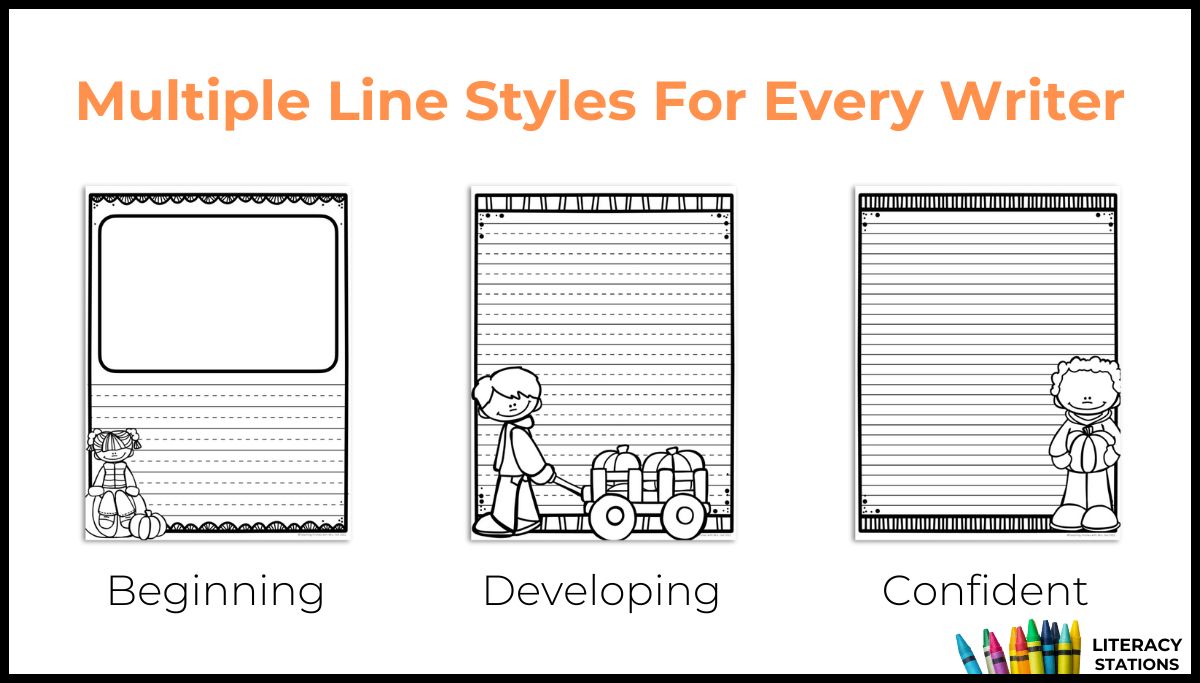
A simple way to differentiate writing is by offering multiple kinds of paper for the same task. Some students might write one word and draw, while others write full sentences or structured paragraphs. Matching tools to skill level helps everyone work independently.
The Pumpkin Writing Center is built for flexible use in your classroom. It includes print-and-go pages, visual supports, and vocabulary activities aligned with SOR. Because the scaffolding is built into this resource, you can assign the same task with adjusted expectations.
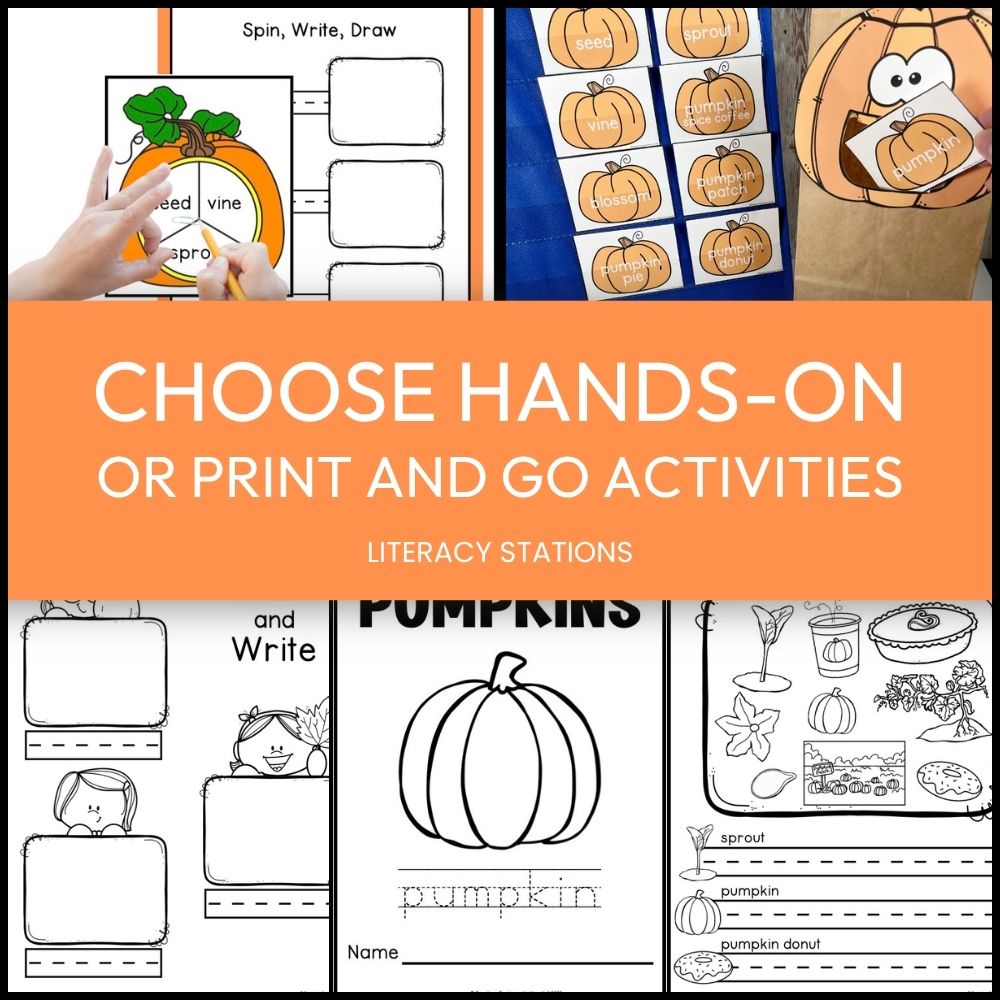
These pumpkin writing activities give students a seasonal way to build real writing skills. With the right supports, (scaffolded prompts, flexible paper, and vocabulary tools) teachers can reinforce sentence structure, help build vocabulary, and keep students engaged.
Ready to Get Started?
Start with the Free Pumpkin Writing Paper—it includes 36 pages of lined paper, drawing space, and 20 pumpkin-themed prompts to support your fall writing plans.
When you’re setting up your writing centers, take a look at the full Pumpkin Writing Center. It includes printable templates, vocabulary cards, and digital activities that support independent writing at your literacy centers.
More Pumpkin Activities And Ideas
Pumpkin Investigation and Experiments
Explore pumpkin size, weight, seeds, and sink/float predictions. Use these hands-on activities to support science standards and encourage observation, measurement, and data collection.
20 Pumpkin Read-Alouds Blog
Find your next classroom favorite in this list of engaging, teacher-approved pumpkin picture books—perfect for building comprehension and seasonal fun.
First Grade Writing Prompts for Every Month
A month-by-month list of first grade writing prompts from September to May, plus the simple weekly writing center routine that makes them work all year.