In one first grade classroom, you can have a student who is still working on letter sounds sitting right next to a student who writes a full page about her cat. Both of them go to the same writing center. Both of them need to be challenged, and neither of them should be bored or in tears.
That’s the reality of differentiated writing centers in first grade. The good news is that differentiating doesn’t mean making three separate centers. This post shows how to set up one center with three levels, so every student is writing at the right level and you’re not prepping three times as much.
What Differentiated Writing Looks Like in First Grade
First graders grow as writers throughout the year. It’s common to see a variety of writers in your classroom, such as:
- Word writers – They label pictures, write the beginning sounds or whole words, and use the word wall for spelling.
- Sentence writers – They write one or two complete sentences, usually with a frame like “I see a ___.”
- Paragraph writers – They write three or more connected sentences with a beginning, middle, and end.
The goal isn’t to lock students into a group. The goal is for every student to be successful practicing with the writing activity in front of them.
1. Same Topic, Different Page
The simplest way to differentiate is to keep the topic the same for everyone and change the writing page.
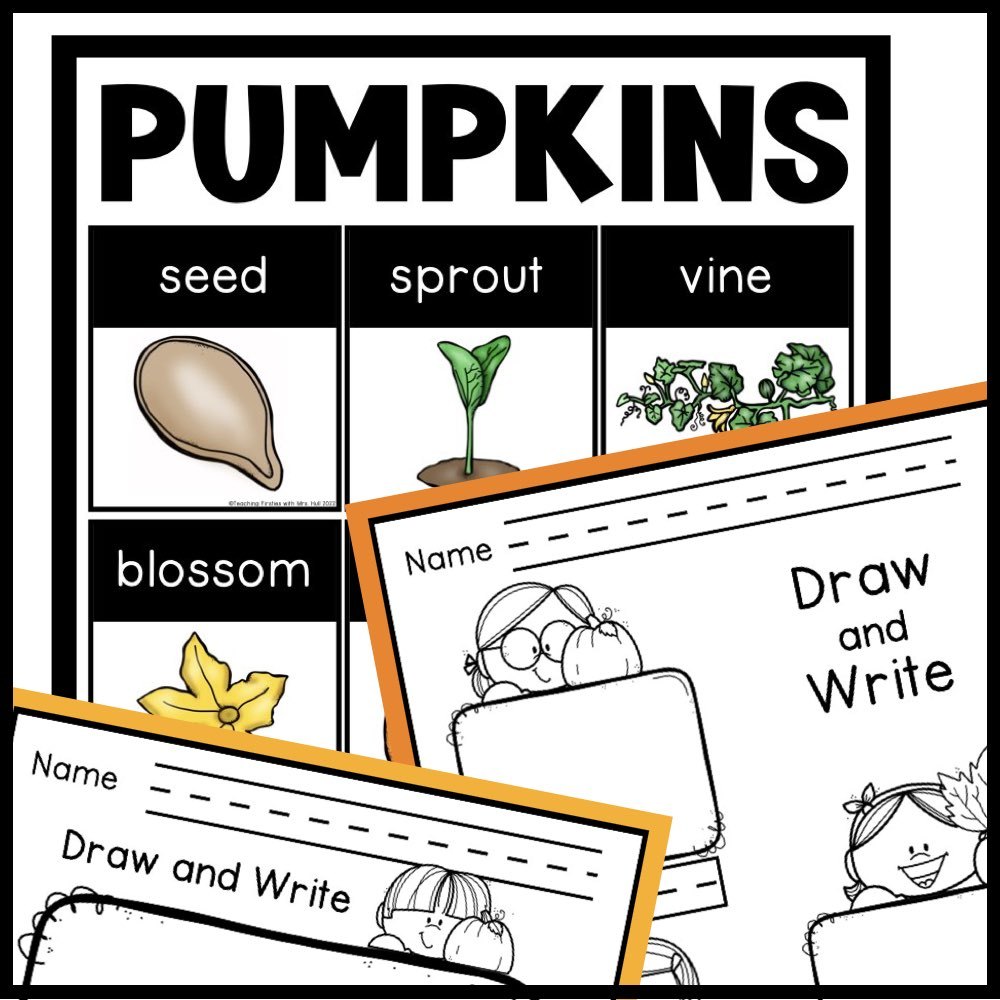
Problem You make one worksheet, and half the class finishes it in three minutes while the other half can’t get started.
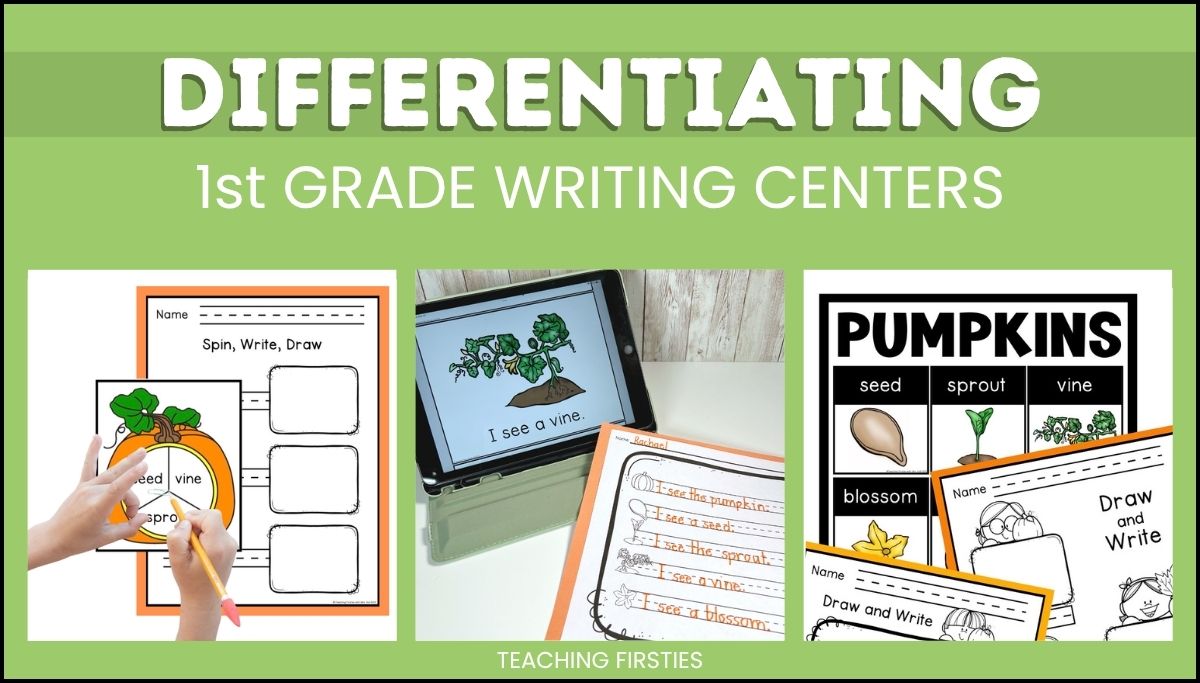
Solution Offer three versions of the same page: one with a big picture box and one line, one with a picture box and three lines, and one with a small picture box and full lines. Everyone writes about the same theme. The pages help students practice their writing at their current level.
Because the topic is the same, no one feels singled out. Students just see the fun pumpkin writing activity.
2. Build In Vocabulary Support
Most first graders who “can’t write” actually can’t spell what they want to write. Vocabulary support takes that barrier away for everyone, not just your struggling writers.
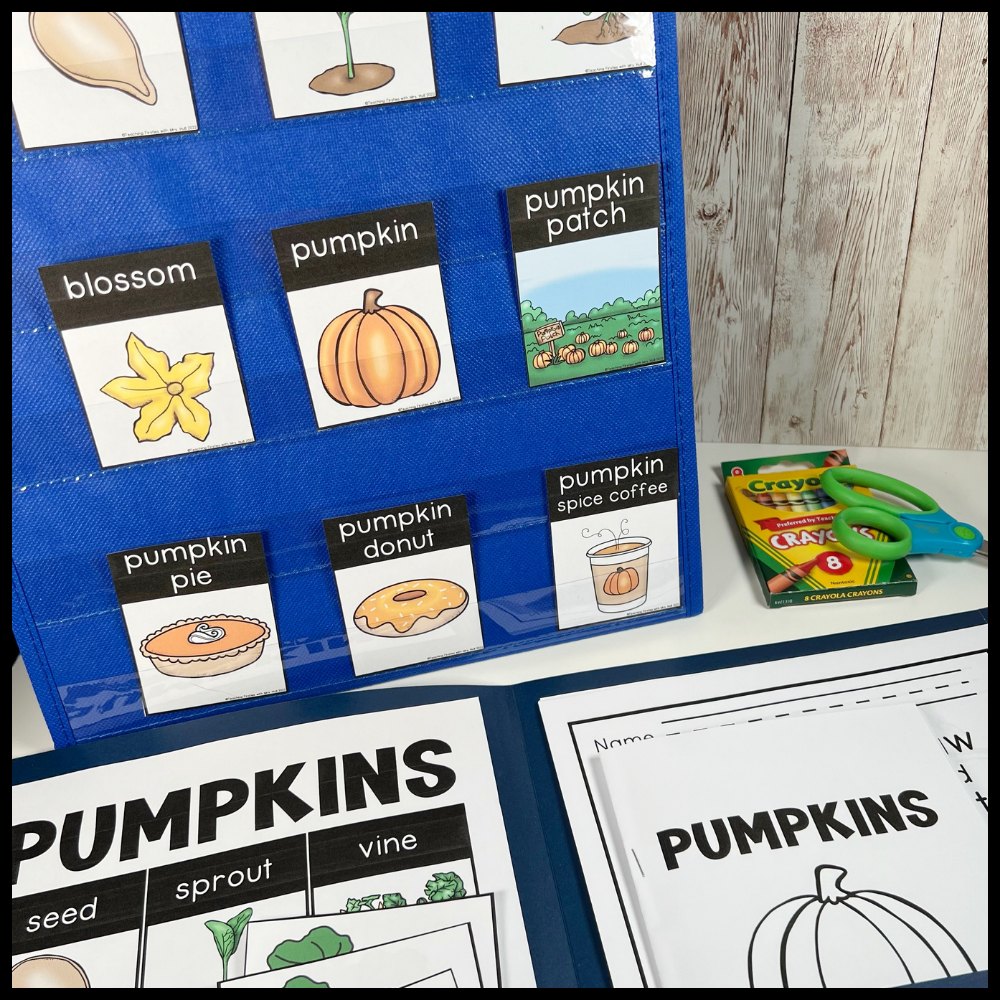
- Picture word cards – Keep a set in the center with a picture and word on each card. A smaller pocket chart works great for word cards.
- Posters – Hang a theme poster with the words labeled right where students sit.
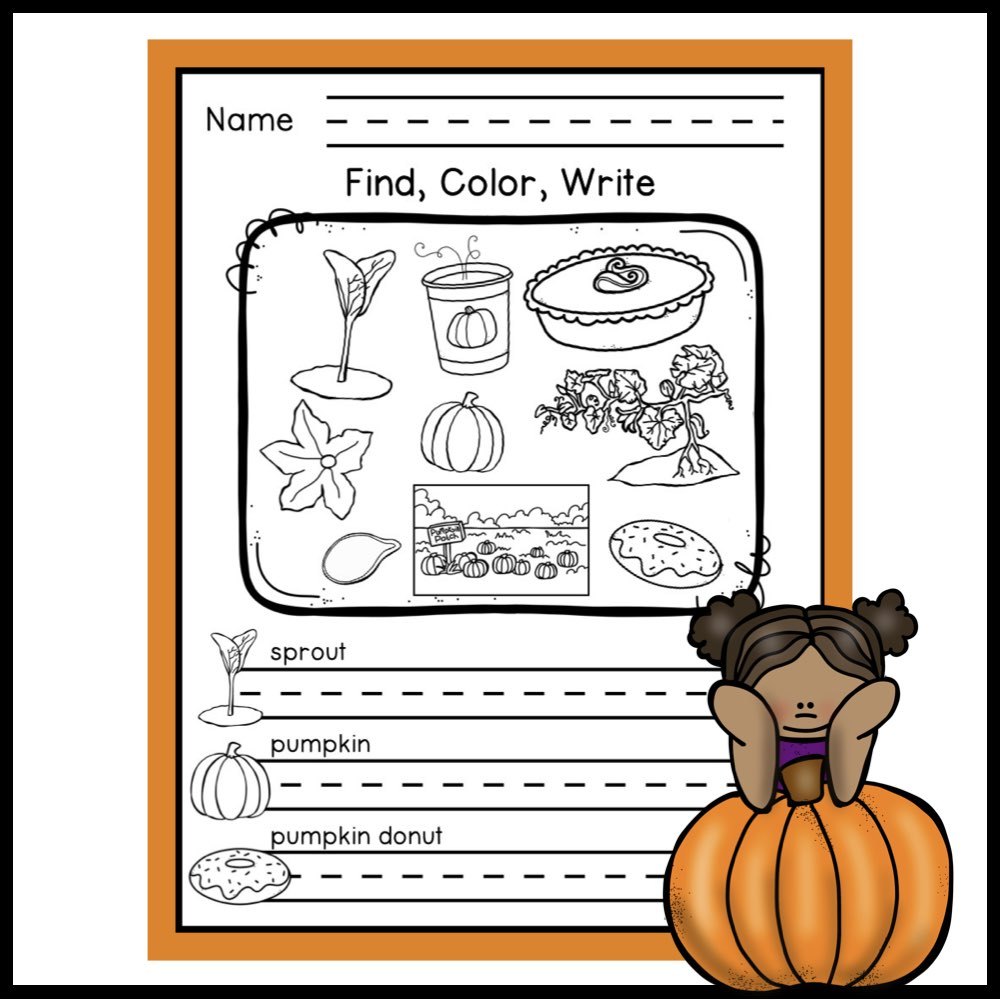
- Find, Color, Write – Students find the vocabulary word, color the picture, and write the word or a sentence.
Word writers use the cards to copy words. Sentence writers use them to spell tricky words within their sentences. Paragraph writers use them to extend what they’re already writing about. One tool supports all three levels.
Free for first grade teachers
Free writing papers for every season
Seasonal writing paper for first grade, ready to print. Plus one new idea for your literacy centers each week.
3. Use Sentence Frames (and Take Them Away)
Sentence frames are the bridge from word writing to sentence writing. Start the year with a frame on every page, then remove it as students are ready.
- Level 1 – “I see a ___.” Students fill in one word.
- Level 2 – “The ___ is ___ because ___.” Students add detail and a reason.
- Level 3 – No frame. Students use the word wall and a checklist instead.
Pro Tip Keep a small stack of frame strips in the center. Students who need a frame grab one; students who don’t, don’t. No announcement needed.
4. Let Students Choose Their Level
This one surprises teachers: when you let first graders choose, most of them choose well. Put all three page versions in the center and teach students how to pick.
Try this script during your mini-lesson: “Pick the page that feels a little tricky, not too easy and not too hard. If you finish and you still have ideas, grab the next page up.”
Check in during small groups. If a strong writer always picks the easiest page, have a quick private chat and set a goal together. Most of the time, choice builds confidence and stamina at the same time.
5. Differentiate the Finish Line, Not the Activity
Topic spinners are a great example. Everyone spins the same spinner, but the activity is based on the individual student:
- Word writers – Write the word you land on and draw it.
- Sentence writers – Write a sentence using the word.
- Paragraph writers – Spin three times and write a short paragraph using all three words.
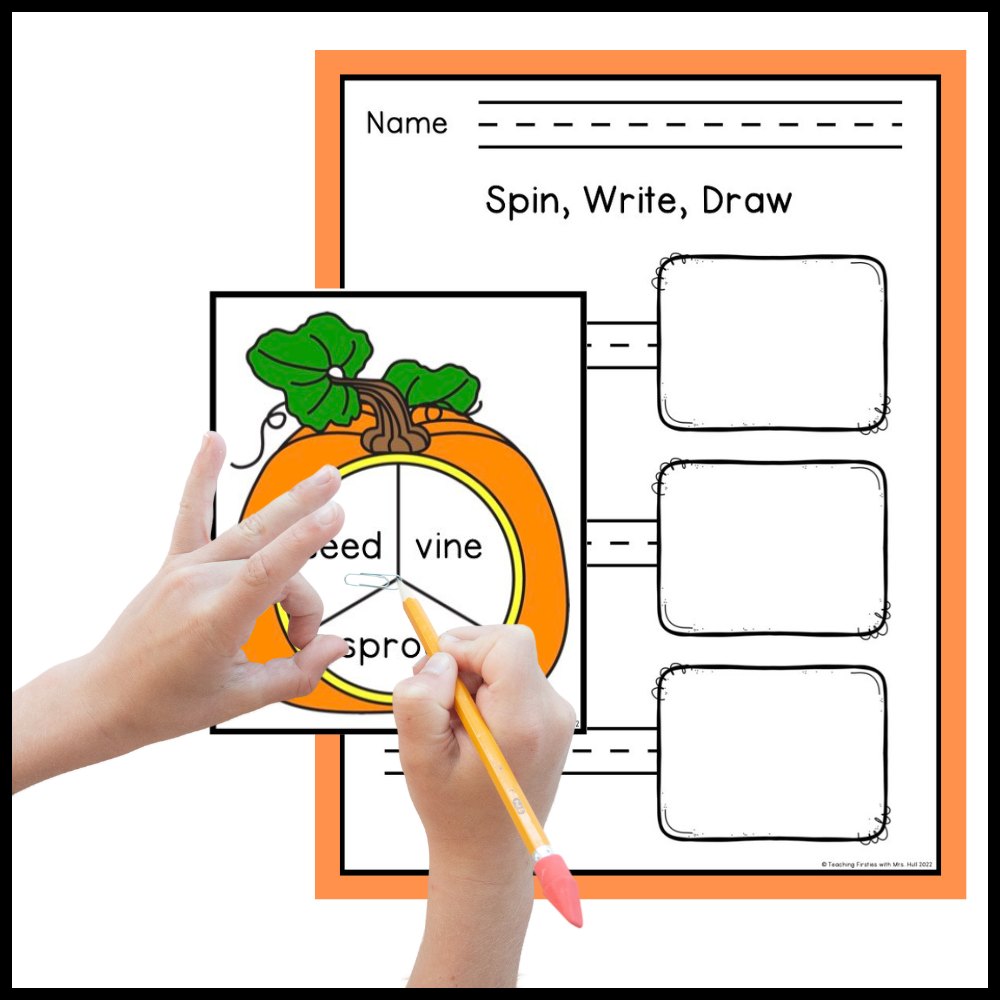
The activity looks identical from across the room. That’s exactly what you want.
6. Keep the Routine the Same All Year
Differentiation works best when students aren’t also learning a new routine. If your writing center uses the same structure every week, such as word wall, spin and write, draw and write, write what you see, and publish, then students can focus all of their energy on the writing itself.
When a new theme starts, only the words and pictures change. Your sentence writers know exactly where the pages are. Your paragraph writers know they can grab the next level of writing paper. You get to spend your time teaching instead of re-explaining directions.
Quick Recap
- Keep one topic and change the page, not the whole center.
- Give everyone vocabulary support with word cards, posters, and Find, Color, Write.
- Use sentence frames as a bridge, then take them away.
- Let students choose their level, and check in on the choice.
- Change the expectations, not the activity.
- Keep the routine the same all year.
Differentiated Writing Centers, Already Made
Every writing center on Literacy Stations is built exactly this way. Each one includes vocabulary cards and posters, topic spinners, Find, Color, Write, and differentiated Draw and Write and Write What You See pages, so students write words, sentences, or short paragraphs. They’re aligned to W.1.2, W.1.3, and W.1.8 and come in printable and digital formats.
The Fall Writing Centers Bundle is a great place to start this time of year. It has 16 centers, including apples, pumpkins, Halloween, and turkeys, which covers you from now until winter break.
Final Thoughts
Differentiation in first grade doesn’t have to mean three times the work. One topic, one routine, and three versions of the page will reach almost every writer in your room. Start with just one strategy from this list this week, and build from there.