Every month, the same question: What are my students writing about this week? You’ve got a writing block every day and a class of first graders who are ready to go, and you’re scrolling for ideas at 9:00 on a Sunday night.
In this post, you’ll find first grade writing prompts for every month from September through May, organized by theme, plus the one weekly routine that makes it feel easy instead of chaotic.
Why Monthly Themes Work in First Grade
First graders write more when they care about the topic and know the words. A monthly theme gives them both.
- Vocabulary builds up – A week of pumpkin words means students aren’t stuck spelling “pumpkin” on Friday.
- Background knowledge grows – Read-alouds, science, and writing all point at the same topic.
- Excitement is built in – Nobody has to be convinced to write about snowmen in January.
The catch is that a new theme can’t mean a new routine. That’s where most writing centers fall apart.
The Weekly Writing Center Routine
Here’s the routine I’d use for every theme, all year. Students learn it in September, and after that the only things that change are the words and pictures.
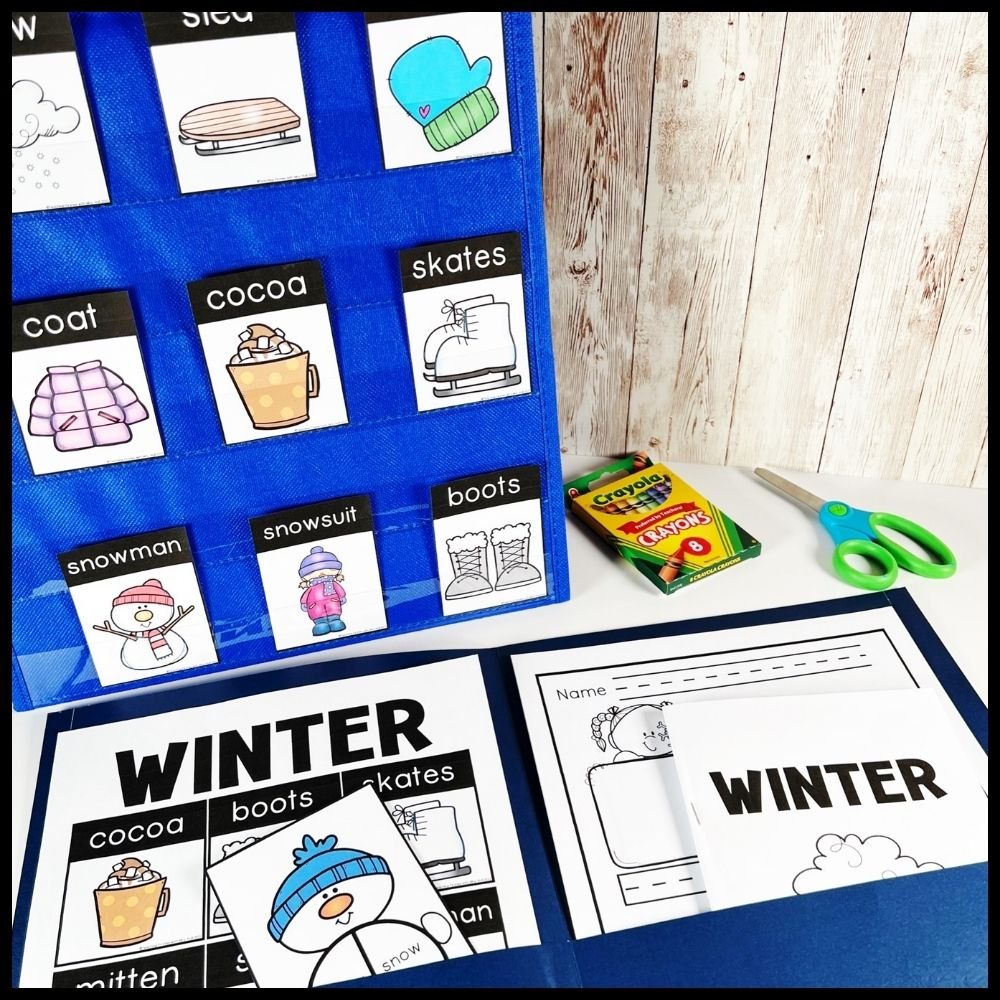
- Monday: Word wall – Introduce 6–10 theme words with pictures. Read, clap, and talk about them.
- Tuesday: Spin and write – Students spin a topic spinner and write the word, a sentence, or a short paragraph.
- Wednesday: Draw and write – Students draw, then write a narrative or informative piece.
- Thursday: Write what you see – Students describe a picture or real object using the theme words.
- Friday: Publish – Students finish a mini-book or a final page and share it with a buddy.
Pro Tip Put each week’s materials in the same bin, in the same spot. When the routine never moves, your writing center practically runs itself while you meet with small groups.
Free for first grade teachers
Free writing papers for every season
Seasonal writing paper for first grade, ready to print. Plus one new idea for your literacy centers each week.
Fall Writing Prompts (September–November)
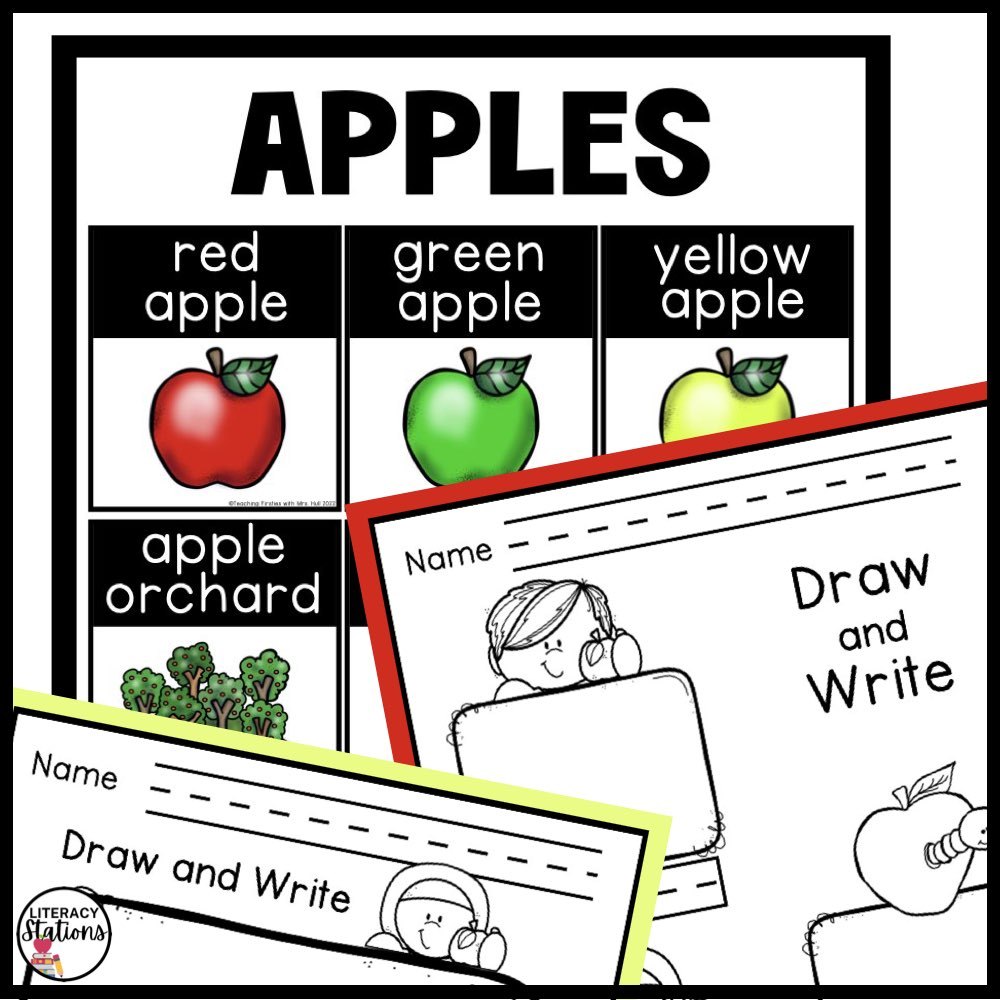
September: School, Apples, and Johnny Appleseed
- Opinion – What is the best part of your school day? Why?
- Narrative – Write about your first day of first grade.
- Informative – Tell three facts about apples.
- Science – If Johnny Appleseed planted a tree in your yard, how would you help it grow?
More ideas: Apple Writing Ideas for First Grade
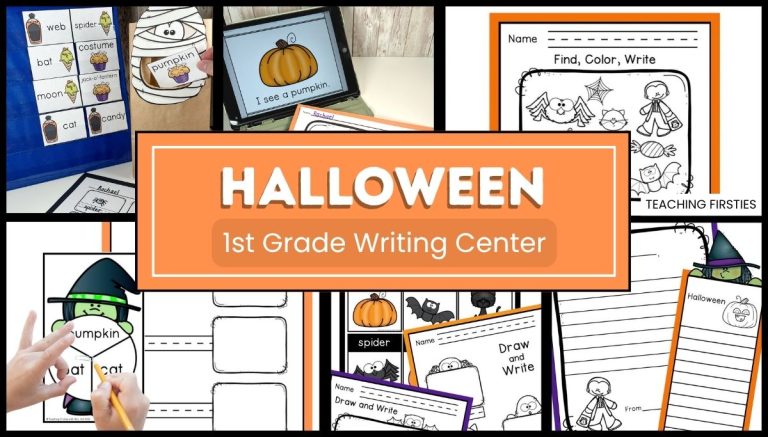
October: Pumpkins, Bats, Spiders, and Halloween
- Opinion – Would you rather see a bat or a spider? Why?
- Narrative – Write about a time you picked out a pumpkin.
- Informative – How do you follow directions during a fire drill?
- Descriptive – Describe a jack-o’-lantern using your five senses.
More ideas: Halloween Writing Activities for First Grade and Pumpkin Writing Activities
November: Families, Farms, Food, and Turkeys
- Opinion – What is the best food at a family dinner?
- Narrative – Write about something special your family does together.
- Informative – What animals live on a farm? What do they need?
- Just for fun – How would a turkey hide from the farmer?
Winter Writing Prompts (December–February)
December: Gingerbread, Candy, and Winter Treats
- Opinion – Hot cocoa or chocolate milk? Tell why.
- Narrative – Retell The Gingerbread Man in your own words.
- Informative – How do you build a gingerbread house?
- Just for fun – If you could invent a new candy, what would it be?
January: Snow, Arctic Animals, and Winter Sports
- Opinion – What is the best winter sport?
- Narrative – Write about a cold day you remember.
- Informative – How do polar bears stay warm?
- Descriptive – Describe a snowman using color, size, and shape words.
February: Valentines, Groundhogs, Pets, and Healthy Teeth
- Opinion – Will the groundhog see his shadow? What will happen next?
- Narrative – Write about a time you were a good friend.
- Informative – How do you take care of your teeth?
- Just for fun – What pet would you want in your classroom?
Spring Writing Prompts (March–May)
March: Weather, Space, and St. Patrick’s Day
- Opinion – What is the best kind of weather?
- Narrative – Write about a day it rained (or snowed!) when you didn’t expect it.
- Informative – What would you see on a trip to space?
- Just for fun – What would you do if you found a pot of gold?
April: Earth Day, Plants, and Butterflies
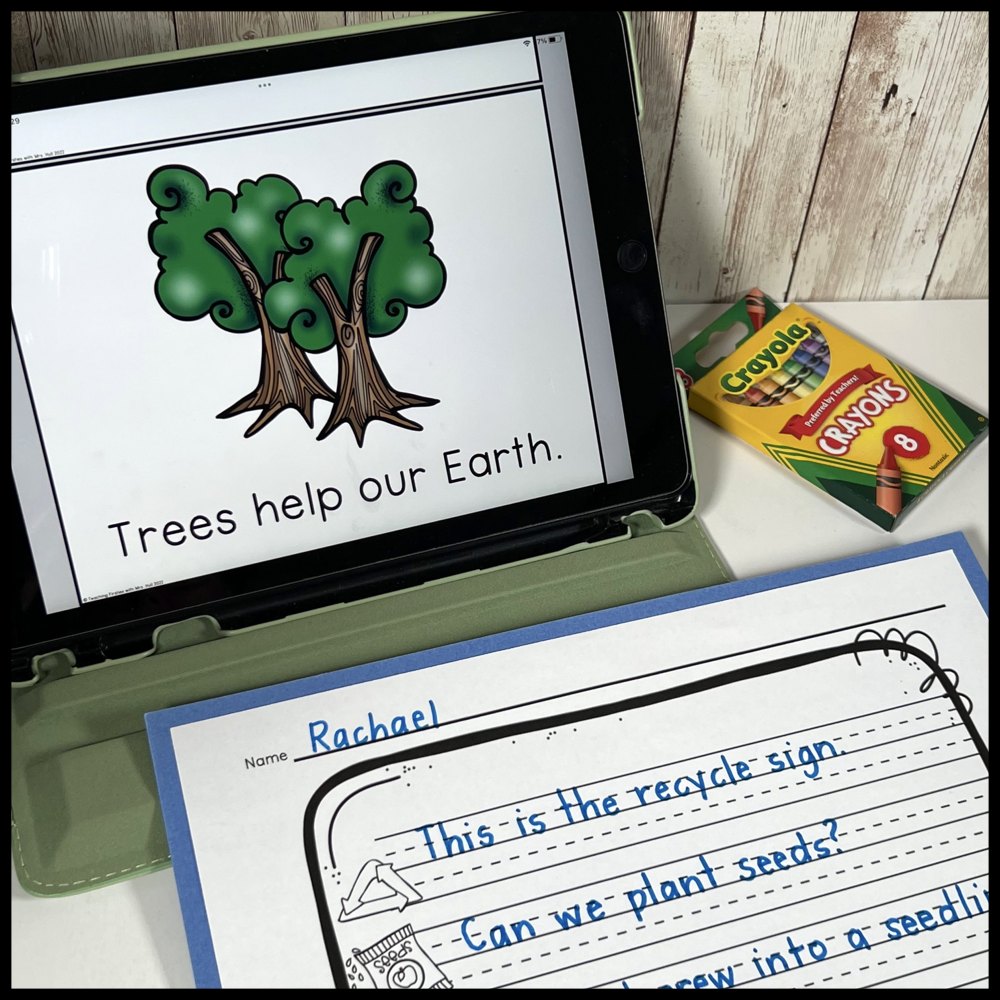
- Opinion – What is the most important way to help the Earth?
- Narrative – Write about a time you planted something.
- Informative – How does a caterpillar become a butterfly?
- Descriptive – Describe a flower using your five senses.
More ideas: Simple Earth Day Classroom Ideas
May: Oceans, Camping, the Zoo, and Summer
- Opinion – Beach or camping? Which is better and why?
- Narrative – Write about your favorite first grade memory.
- Informative – Tell three facts about an ocean animal.
- Just for fun – If you ran the zoo for a day, what would you change?
More ideas: End of Year Writing Activities
How to Differentiate Every Prompt
Every prompt above works at three levels. You don’t need a separate list for each reading group:
- Words – Students label a picture using the word wall.
- Sentences – Students write one or two complete sentences with a sentence frame.
- Short paragraphs – Students write three or more connected sentences.
Want the Whole Year Done for You?
These prompts are a great start. But if you’d rather not make word cards, spinners, and writing pages for 36 weeks, we’ve already done it.
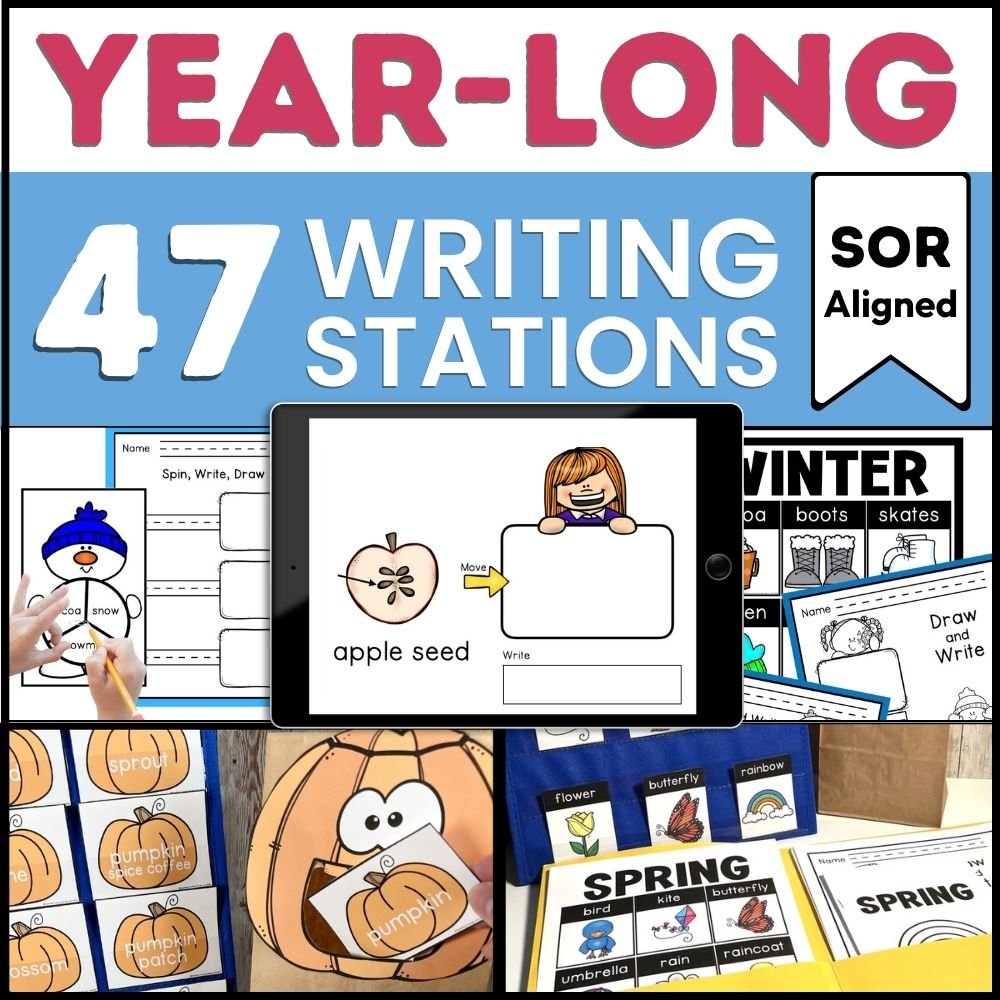
The Year Long Writing Centers Bundle has 47 themed writing centers, one for every theme in this post and more. Each center follows the same routine: vocabulary cards and posters, topic spinners, Draw and Write pages, Write What You See pages, puppets, and a mini-book. Every activity is differentiated so students write words, sentences, or short paragraphs, and they’re all available in print and digital (Google Slides).
Pro Tip If you also want reading, fluency, and spelling centers, look at the Library Card. It gives you every resource on Literacy Stations for 12 months, including all 47 writing centers, for one payment of $100. There’s no subscription and it doesn’t renew on its own.
Final Thoughts
You don’t need a brand-new plan every month. You need one routine your students know by heart and a fresh set of words to plug into it. Pick this month’s theme, set out the word wall on Monday, and let your first graders take it from there.